
Capsize of Small Craft with 3 Fatalities
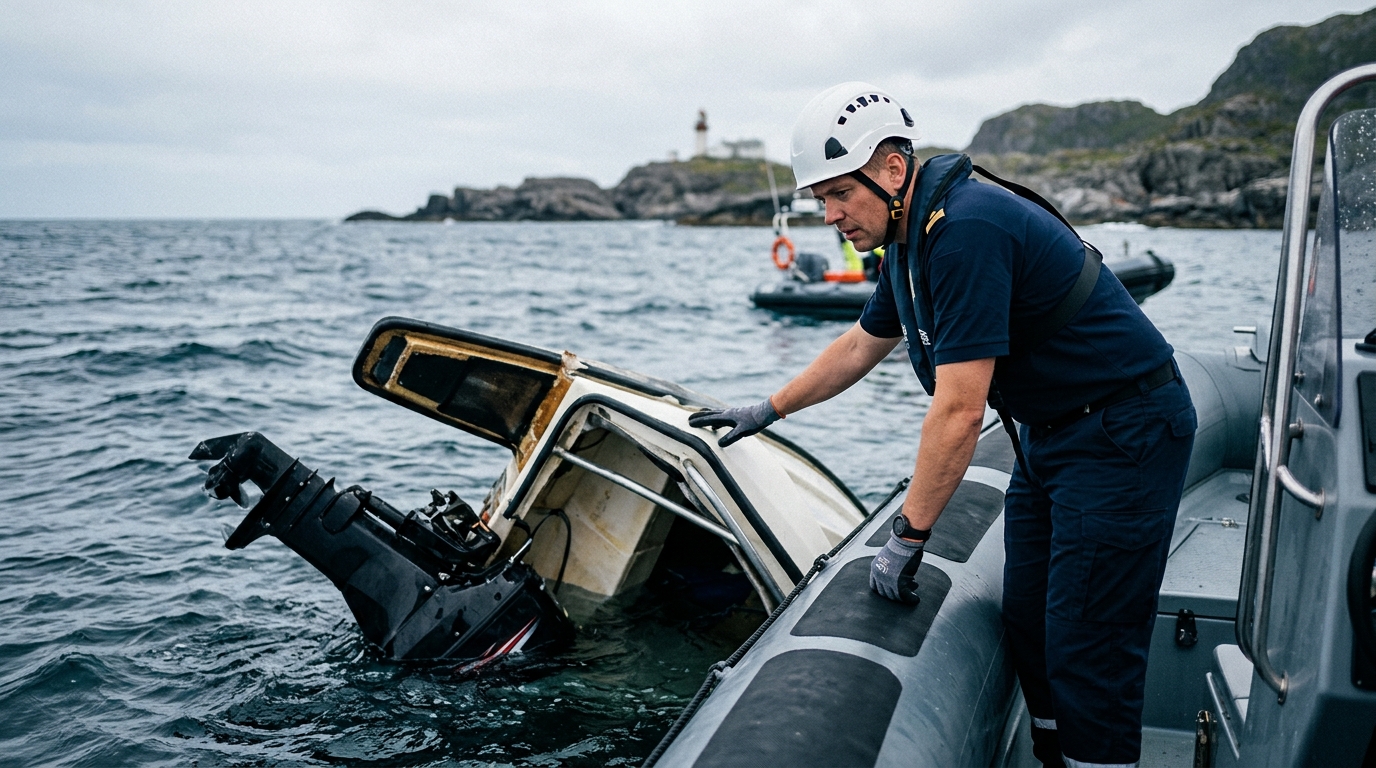
Operational Briefing: Rental Vessel Capsize Incident
What Happened:
On May 4, 2025, a rental vessel, identified as a Dolmøy 230 Fisker, capsized north-east of Kråkenes Lighthouse in Vestland County while three tourist anglers were engaged in fishing activities. All three individuals on board tragically lost their lives as a result of the accident.
The investigation determined that the most probable cause of the capsize was the gradual ingress of water, exacerbated by the prevailing wind and sea conditions. Water initially entered through drain openings and over a recessed step-through on the starboard side of the aft deck. From there, it progressed into the vessel’s hold via a hatch that was found to be non-watertight, lacking proper seals and a functional locking mechanism. Subsequently, water was able to enter voids within the stiffeners and spaces between the inner liner and the outer hull.
The vessel was found not to comply with ISO standards and possessed significant vulnerabilities concerning water ingress. Crucially, the persons on board were unable to issue a distress alert, and approximately eight hours elapsed from the time of the capsize until the first angler was discovered. Their only means of communication for alerting others were mobile phones.
Immediate Operational Checks:
Fellow officers and independent mariners must immediately conduct thorough checks of their vessels’ watertight integrity. Pay particular attention to all hatches, deck openings, and access points to internal compartments, ensuring they are equipped with effective seals and robust, functioning locking mechanisms.
Verify that all vessels, especially those engaged in rental or recreational activities, comply with relevant safety and ISO standards, and are free from inherent vulnerabilities to water ingress.
Furthermore, it is imperative to ensure that reliable means of distress alerting, such as an Emergency Position-Indicating Radio Beacon (EPIRB) or Personal Locator Beacon (PLB), are readily available and operational, not solely relying on mobile phones for emergency communication. Ensure immersion suits are available, and suitable for expected water temperatures.
Review your vessel’s stability characteristics, especially when operating in or anticipating adverse weather conditions.
Lessons Learned:
- Non-watertight hatches and inadequate sealing/locking mechanisms contributed to progressive flooding.
- Vessel design and construction did not comply with ISO standards, leading to significant vulnerabilities to water ingress.
- Lack of effective and dedicated distress alerting equipment (EPIRB/PLB) severely hampered rescue efforts.
- The absence of a robust regulatory framework for rental vessels, including requirements for tracking and alerting systems, poses a significant safety risk.
- Gradual flooding, even in seemingly moderate conditions, can lead to catastrophic vessel instability and capsize.
Tags:
Capsize, Flooding, Rental Vessel, Alerting, Watertight Integrity
Official Report
Read the full safety report here: Report on marine accident involving a rental vessel north-east of Kråkenes Lighthouse in Vestland County, 4 May 2025


